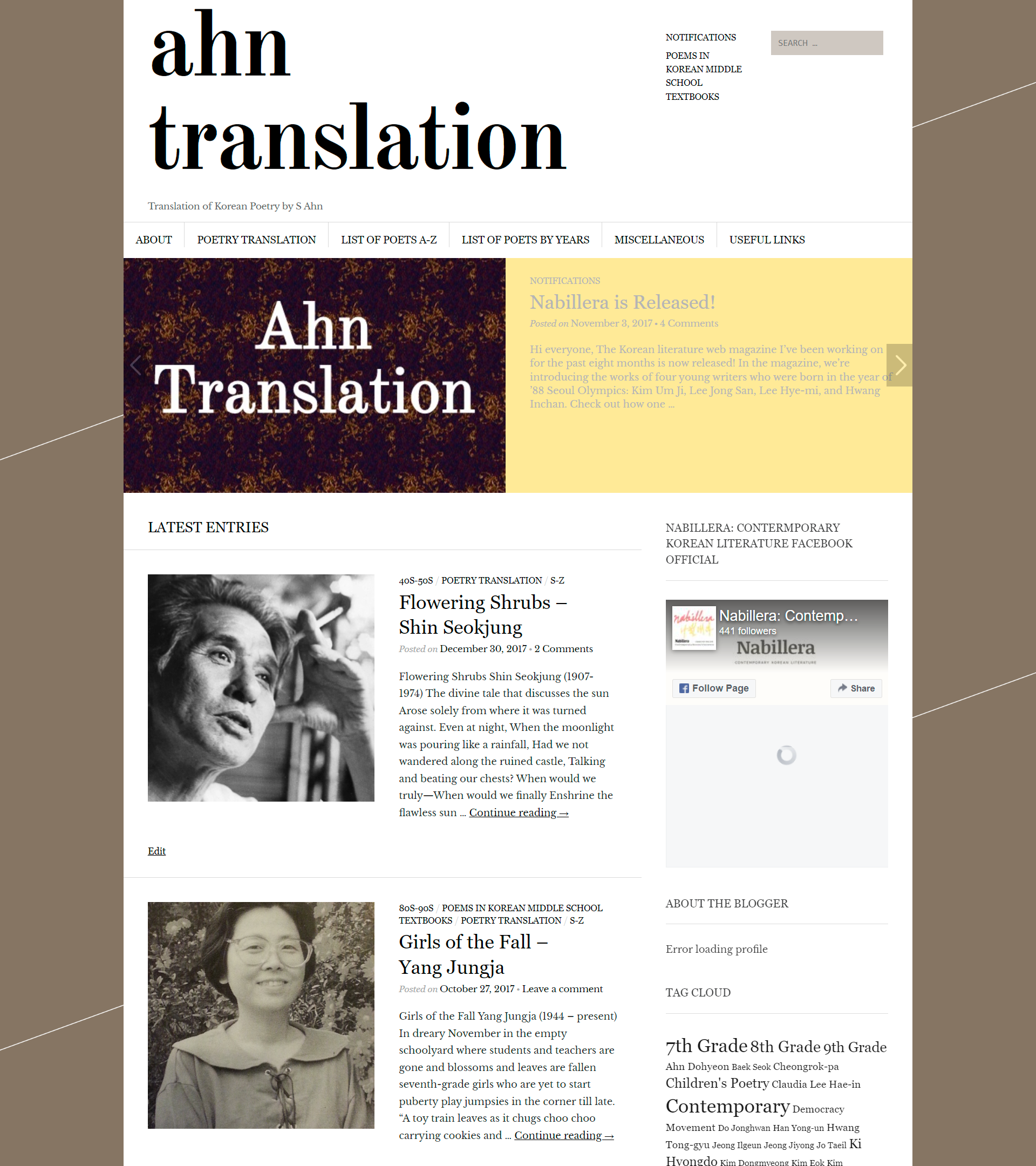
I have translated contemporary Korean poetry for fun. Growing up, I had a deep appreciation of creative writing and Korean literature from the early- and mid-20th century. In 2014, I decided to combine these interests and translate Korean poetry. This journey started out on AhnTranslation, which still attracts a significant number of viewers all over the world.
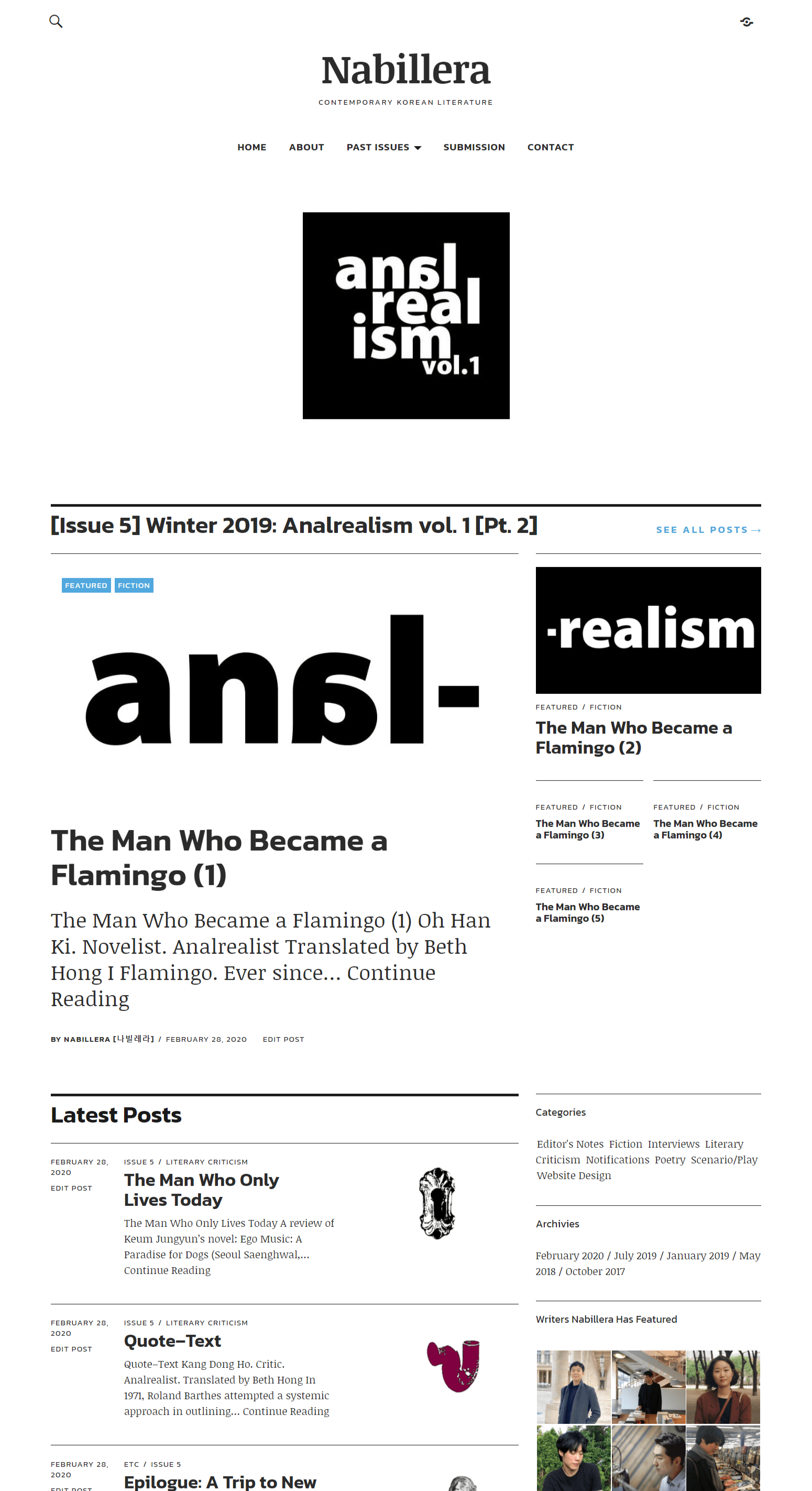
Since then, I have translated for multiple projects, such as Humans of Seoul (a street interview series) and Time to Read Poems (an award-winning documentary). Moreover, my translations have also appeared in an IB textbook, city government event, online journal, and academic publications and presentations. In December 2016, I launched Nabillera: Contemporary Korean Literature, hoping to introduce novel attempts in the Korean literary circle to English readers. I published five issues as Editor-in-Chief until I started graduate school in the fall of 2019.
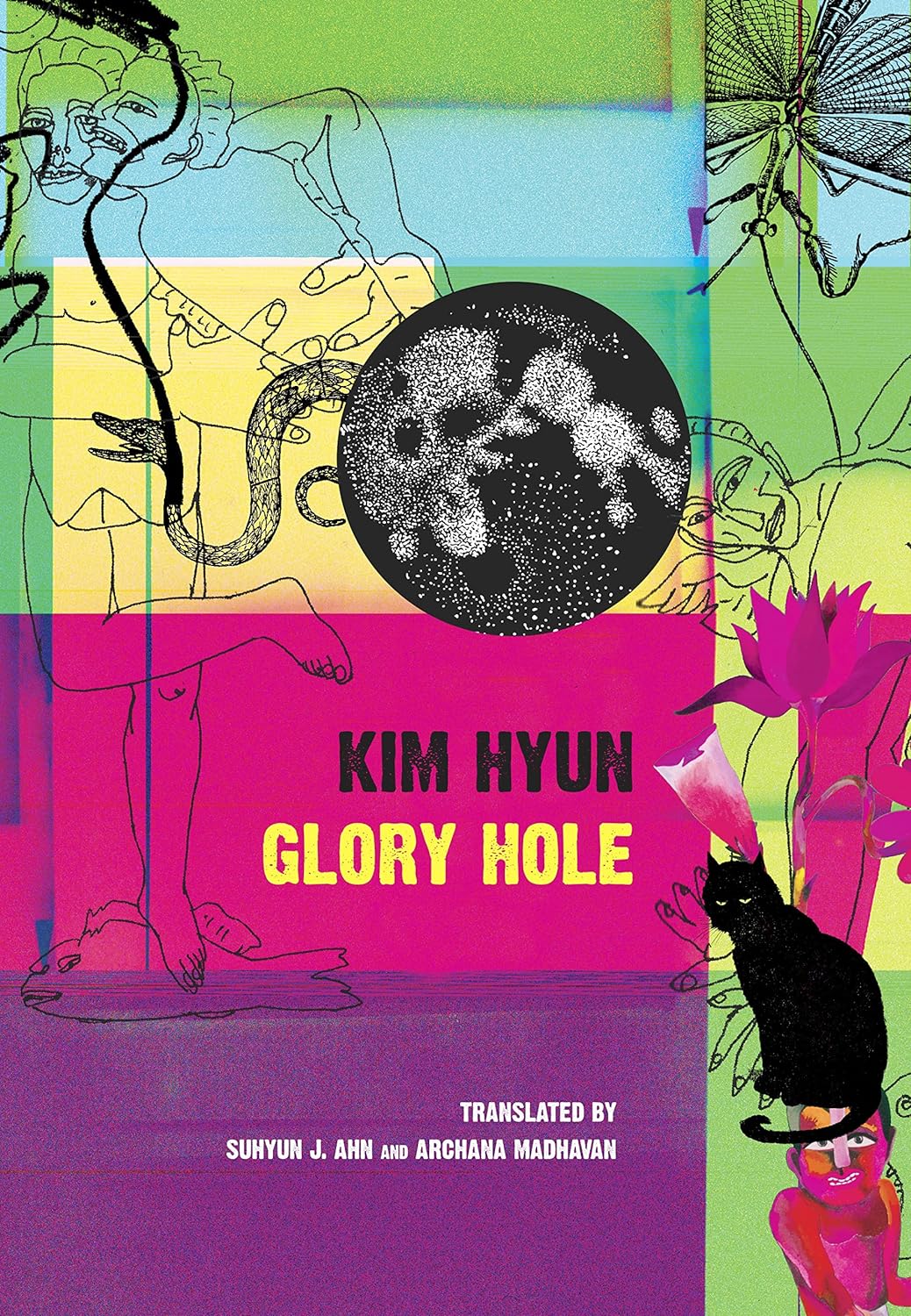
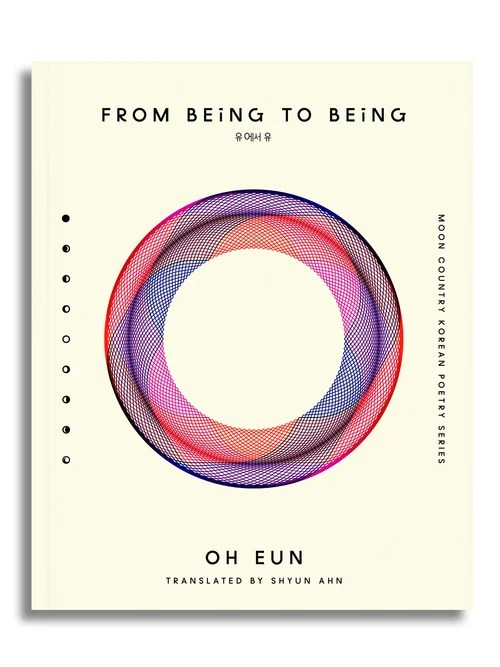
In addition, in June 2022, Kim Hyun’s Glory Hole, translated by Archana Madhavan and me, was published through Seagull Books. The book has received great reviews from literary scholars and reviewers, including Poetry Foundation and Asymptote. Since then, I finished the translation of From Being to Being by Oh Eun, which was published by Black Ocean Press in 2025. I am planning to translate Oh Eun’s Pronoun for Nothing (tentative title; K: 없음의 대명사) starting in the winter of 2026.
To those who are curious, here are some of my thoughts on literary translation:
Q: What do you like about poetry translation?
A: I love it when language and imagery disintegrate, making one feel the texture of the language in its roughest state. Heavily linguistic experience, poetry does this when you attempt to render it in another language. In short, you can feel languages clash so vividly when you translate poetry. As much as I am devoted to clarity in my academic writing and productivity in my professional life, I indulge in this peaceful destructiveness in the artistic sphere.
Q: What is a good literary translation?
A: While literary translation is a creative and artistic act that navigates the difference between languages, the finest translation can be attained only when a translator truthfully translates the original work. And by “truthfully,” I do not mean a strict adherence to either literal or liberal translation. Rather, the objective of a translator must be recreating an author’s intention and readers’ experience when reading the original work. In experimental poems, this might require literal translation, which novice literary translators often fear. Conversely, there are circumstances where a translator must take the lead and translate liberally, recognizing the need to sacrifice some linguistic elements in poetry. A good translator knows when to choose liberal or literal translation and what and how to sacrifice. I always tell people this: Poetry translation is about what you give up translating, more so than what you translate.

